

Table of Contents
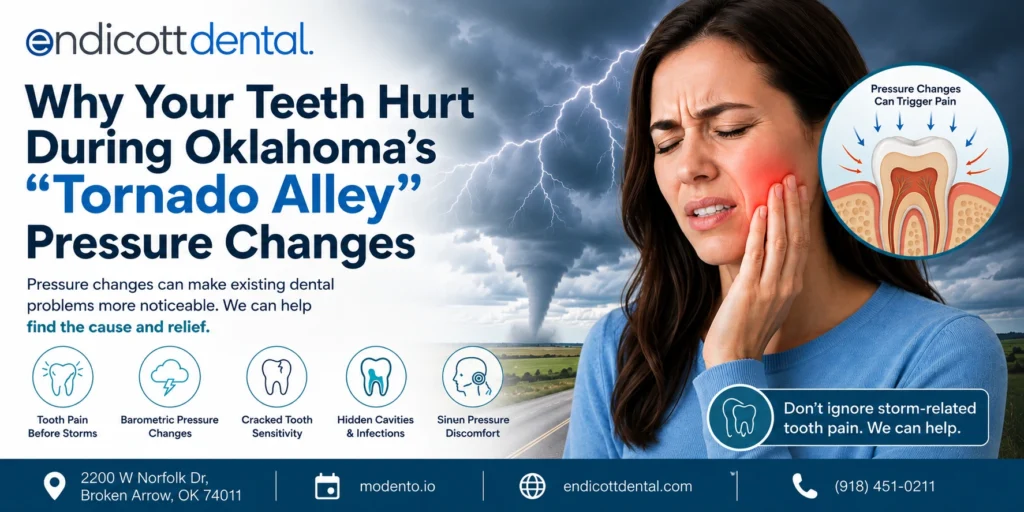
If you've ever noticed a toothache appearing right before a storm rolls into Broken Arrow, you're not imagining it.
Many Oklahoma patients report increased tooth pain, jaw discomfort, headaches, or tooth sensitivity when major weather systems move through the area. And considering that Oklahoma sits squarely in Tornado Alley, we experience some of the most dramatic barometric pressure changes in the country.
The short answer is this:
Changes in air pressure can make existing dental problems more noticeable. They don't usually cause tooth pain by themselves, but they often reveal issues that were already there.
If a tooth hurts every time a storm approaches, your teeth may be trying to tell you something.
Quick Answer: Can Weather Really Make Your Teeth Hurt?
Yes.
Barometric pressure changes can affect the pressure inside your teeth, sinuses, and surrounding tissues. If you have an untreated dental issue, those changes may increase discomfort and make a previously mild problem suddenly impossible to ignore.
Patients often describe it as:
- A throbbing tooth before a storm
- Sharp pain when a weather front moves in
- Increased sensitivity to hot or cold
- Pressure in the upper teeth
- A dull ache that disappears after the weather passes
The weather isn't creating the problem.
It's exposing one that already exists.
Why Does This Happen?
Think about your teeth like tiny pressure-sensitive structures.
Healthy teeth are dense and sealed. But when a tooth has:
- A cavity
- A crack
- An old failing filling
- An infection
- An abscess
- Exposed dentin
there may be microscopic spaces where pressure changes can be felt more intensely.
When Oklahoma weather systems rapidly change atmospheric pressure, those spaces can react differently than the surrounding tooth structure.
The result?
Pain.
It's similar to how some people experience joint pain before a storm.
The weather isn't damaging the joint, it is simply making an existing issue more noticeable.
The Most Common Dental Problems Behind "Weather Toothaches"
1. A Hidden Cavity
This is one of the most common causes.
Small cavities often produce few symptoms day-to-day. However, pressure changes can sometimes make the affected tooth more sensitive.
If your tooth only hurts when storms approach, don't assume the weather is the problem.
The cavity may be.
2. A Cracked Tooth
Tiny cracks can be surprisingly difficult to see.
During pressure changes, these cracks may become more symptomatic, creating sharp pain or sensitivity that seems to come and go.
Patients are often surprised to learn that the "storm tooth" they've noticed for years is actually a cracked tooth.
3. A Dying Nerve
A tooth doesn't always become painful immediately when nerve damage begins.
Changes in pressure can sometimes irritate an already inflamed nerve and make the problem more noticeable.
This is especially common when patients experience:
- Spontaneous throbbing
- Lingering sensitivity
- Pain that wakes them up
4. An Abscess or Infection
Pressure changes can aggravate tissues surrounding an infected tooth.
If a storm-related toothache is severe, accompanied by swelling, or worsening over time, it should be evaluated promptly.
Dental infections do not resolve on their own.
5. Sinus Pressure
Not every weather-related toothache is actually a tooth problem.
Upper back teeth share close proximity with the sinus cavities.
When allergies, sinus congestion, or pressure changes occur, patients often feel discomfort in the upper molars.
This is particularly common during Oklahoma allergy season.
Why Oklahoma Patients Notice This More Than Other Areas
Broken Arrow residents experience dramatic weather swings throughout the year.
Strong storm systems, severe weather fronts, tornado-producing systems, and rapid temperature changes often create significant barometric pressure shifts.
In other parts of the country, those fluctuations may be less noticeable.
In Oklahoma, they're part of life.
That means dental issues that might stay quiet elsewhere often get exposed sooner.
When You Shouldn't Ignore Weather-Related Tooth Pain
Here's what we'd honestly tell a patient sitting in our office:
If your tooth hurts every time the weather changes, don't just blame Oklahoma.
A healthy tooth typically shouldn't become painful when a storm approaches.
Even if the discomfort disappears after the weather passes, the underlying issue often remains.
The sooner a cavity, crack, failing filling, or infection is identified, the simpler and often less expensive the treatment tends to be.
What You Can Do at Home
If you're waiting for an appointment, these steps may help:
- Avoid extremely hot or cold foods
- Use a toothpaste designed for sensitive teeth
- Stay hydrated
- Manage sinus congestion if allergies are contributing
- Avoid chewing on the painful side
What you shouldn't do:
- Ignore recurring symptoms
- Assume the pain is "just weather"
- Wait until the discomfort becomes constant
Dental problems tend to get more expensive, not less, when they are postponed.
So Is It the Weather or Your Teeth?
Usually both.
The weather acts like a spotlight.
The pressure changes don't create cavities, cracks, infections, or failing dental work but they often make those conditions impossible to ignore.
That's why some patients joke that Oklahoma storms can predict dental problems better than a dentist.
They're not entirely wrong.
Not Sure Why Your Tooth Hurts Before a Storm?
If you've noticed recurring tooth pain during Oklahoma's severe weather season, Dr. Drew Endicott and the team at Endicott Dental can help identify what's actually causing it.
Sometimes it's a small cavity.
Sometimes it's a cracked tooth.
Sometimes it's sinus pressure masquerading as a toothache.
The key is finding out before the next storm system rolls through and turns a minor annoyance into a major dental problem.
Frequently Asked Questions
Can barometric pressure actually cause a cavity?
No. Pressure changes don't create cavities. They can make existing cavities more sensitive and noticeable.
Why do my upper teeth hurt when storms come in?
Upper molars sit close to the sinus cavities. Sinus pressure from weather changes can sometimes feel like a toothache.
Can weather-related tooth pain indicate a root canal is needed?
Sometimes. Inflamed or infected tooth nerves may become more painful during pressure changes. An examination is needed to determine the cause.
Why does the pain disappear after the storm?
The pressure change may temporarily aggravate an underlying issue. Once conditions stabilize, symptoms often lessen—but the dental problem may still be present.
Should I see a dentist if the pain only happens during storms?
Yes. Recurring weather-related tooth pain is often a sign that something should be evaluated, even if symptoms come and go.
