

Table of Contents
Most adults worry about cavities.
Many worry about needing a crown.
Some worry about losing a tooth.
But one of the most common and most overlooked dental problems we see in adults over 40 isn't any of those.
It's a gum recession.
The tricky part is that the gum recession usually doesn't hurt when it starts.
There is often no emergency.
No obvious infection.
No severe symptoms.
Just a slow, gradual loss of gum tissue that many people don't notice until the damage becomes difficult or impossible to reverse.
If you're over 40 and you've noticed your teeth looking longer, increased sensitivity, or changes in your gumline, here's what you should know.
Fast Answer
Gum recession occurs when the gum tissue surrounding a tooth pulls away or wears down, exposing more of the tooth and sometimes even the root surface.
Left untreated, gum recession can lead to:
- Tooth sensitivity
- Root decay
- Gum disease
- Bone loss
- Loose teeth
- Tooth loss
The reason it's such a major concern for adults over 40 is simple:
The risk factors tend to accumulate with age.
Years of brushing habits, gum inflammation, grinding, genetics, and normal wear can all contribute to recession over time.
What Exactly Is Gum Recession?
Healthy gums fit snugly around your teeth.
They protect the roots and help support the structures underneath.
When recession occurs, that protective tissue begins moving away from its original position.
As a result:
- Teeth appear longer
- Root surfaces become exposed
- Sensitivity often increases
- Areas that are harder to clean develop
Unlike a cavity, which can often be repaired, gum tissue generally does not grow back on its own.
That's why early detection matters.
Why We See More Gum Recession After 40
It's not that something magical happens on your 40th birthday.
It's that the effects of decades of wear start becoming more visible.
Think of it like the tread on a tire.
A little wear each year may not seem significant.
Twenty years later, it's a different story.
Several factors become more common as we age.
Cause #1: Gum Disease
This is the biggest one.
Periodontal disease remains one of the leading causes of gum recession and tooth loss in adults.
Gum disease starts with inflammation caused by plaque and bacteria.
Over time, that inflammation can destroy:
- Gum tissue
- Supporting bone
- Ligaments holding teeth in place
Many people are surprised to learn that gum disease can progress with very little pain.
In fact, some patients don't realize they have it until recession is already visible.
Cause #2: Brushing Too Hard
This one surprises people.
Many patients assume aggressive brushing equals better cleaning.
It doesn't.
We've seen patients who have brushed vigorously for decades and literally worn away gum tissue over time.
Warning signs include:
- Recession near the gumline
- Notches near the roots
- Sensitivity when brushing
- Worn enamel
Your toothbrush should clean your teeth.
It should not be scrubbing your gums like a kitchen brush.
Cause #3: Teeth Grinding and Clenching
Many adults in Broken Arrow grind their teeth without realizing it.
Grinding creates tremendous pressure on teeth and surrounding structures.
Over time, that pressure can contribute to:
- Gum recession
- Tooth wear
- Cracks
- Bone loss
If you wake up with jaw soreness, headaches, or flattened teeth, grinding may be part of the picture.
Cause #4: Tobacco Use
Smoking and tobacco use significantly increase the risk of gum problems.
Tobacco affects:
- Blood flow
- Healing
- Immune response
- Gum attachment
This is one reason gum disease tends to be more severe and more difficult to treat in smokers.
Cause #5: Genetics
Some people simply inherit thinner gum tissue.
You can have excellent oral hygiene and still experience recession because of your anatomy.
That's why routine dental exams are important.
Not all recession is caused by poor home care.
The First Signs Most People Notice
Many patients don't notice recession until they experience symptoms.
Common warning signs include:
Tooth Sensitivity
Cold drinks suddenly become uncomfortable.
Ice cream becomes less enjoyable.
Brushing causes discomfort.
Teeth Looking Longer
Patients often say:
"My teeth seem bigger than they used to."
What they're actually noticing is exposed root structure.
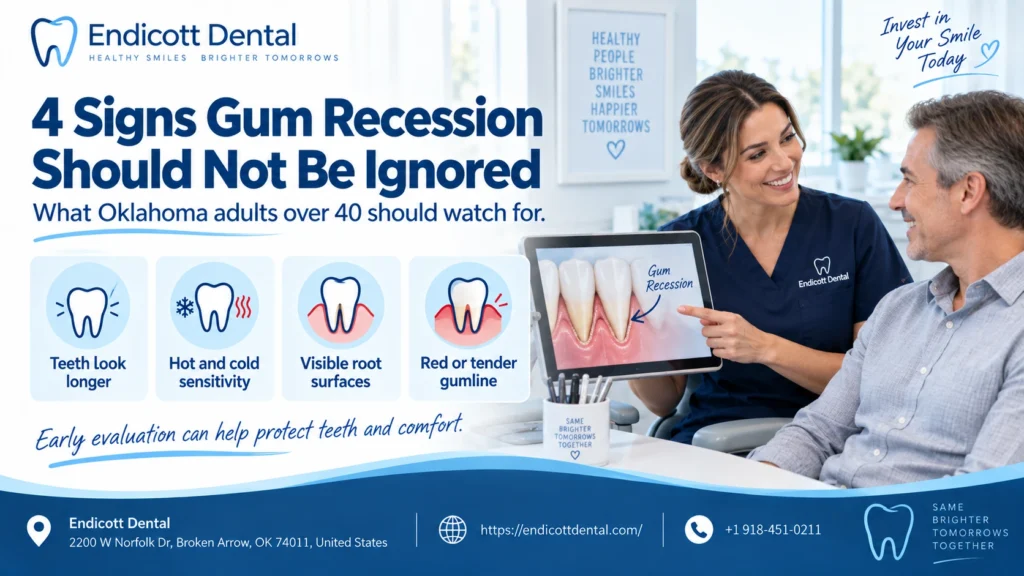
Visible Notches Near the Gumline
Small grooves or indentations may develop near exposed roots.
Food Getting Trapped More Easily
Changing gum contours can create new spaces where food collects.
Why Gum Recession Is More Serious Than It Looks
Some patients assume recession is mainly cosmetic.
Sometimes it is.
Often it isn't.
The roots of your teeth are not protected by enamel the same way the crowns are.
That means exposed roots are more vulnerable to:
- Decay
- Sensitivity
- Wear
- Damage
The deeper recession becomes, the more challenging treatment can be.
Can Gum Recession Be Reversed?
This is one of the most common questions we hear.
Unfortunately:
Lost gum tissue typically does not grow back naturally.
However, treatment may help stop progression and protect the teeth.
Depending on the cause, options may include:
- Improved oral hygiene
- Periodontal therapy
- Nightguards
- Orthodontic treatment
- Gum grafting procedures
- Adjustments to brushing technique
The goal is often to prevent further damage rather than simply restore what has already been lost.
When Gum Grafting Makes Sense
Not every patient with recession needs gum graft surgery.
But in certain situations, it can be extremely beneficial.
Grafting may be recommended when:
- Roots are significantly exposed
- Sensitivity is severe
- Recession is progressing
- Cosmetic concerns are significant
- Tooth stability is at risk
A periodontist can determine whether grafting is appropriate.
The Biggest Mistake Adults Over 40 Make
Ignoring it.
Because recession often develops slowly, many people assume:
"It's been like this for years."
The problem is that small changes add up.
What starts as mild recession can eventually become:
- Significant root exposure
- Advanced gum disease
- Tooth mobility
- Tooth loss
By the time a tooth feels loose, the damage is often substantial.
How to Protect Your Gums Moving Forward
The good news is that many cases of recession can be slowed or prevented.
Start with:
- Regular dental exams
- Professional cleanings
- Soft-bristled toothbrushes
- Gentle brushing techniques
- Daily flossing
- Treatment of gum disease
- Nightguards for grinding when appropriate
- Tobacco cessation
The earlier problems are identified, the more options you typically have.
The Bottom Line
Gum recession may not get the attention that cavities, crowns, or cosmetic dentistry receive.
But for many Oklahoma adults over 40, it's one of the most important threats to long-term oral health.
Why?
Because it often develops quietly.
Because it rarely improves on its own.
And because once significant tissue and bone are lost, treatment becomes more complicated.
The best time to address gum recession is when it's first noticed, not years later when symptoms become impossible to ignore.
FAQs
Is gum recession a normal part of aging?
Not necessarily. While recession becomes more common with age, it is usually associated with specific causes such as gum disease, brushing habits, grinding, or genetics.
Can gum recession cause tooth loss?
Yes. If the underlying cause continues unchecked, recession can contribute to bone loss and tooth instability over time.
Why are my teeth suddenly sensitive?
Exposed root surfaces from recession are a common cause of increased sensitivity to cold, heat, and brushing.
Can a Waterpik help prevent recession?
A Waterpik can support gum health, but it cannot reverse an existing recession. Proper brushing, flossing, and professional care remain important.
How do I know if my recession is serious?
The best way is through a professional evaluation. The amount of recession, rate of progression, bone levels, and overall gum health all influence treatment recommendations.
If you've noticed your teeth looking longer, increased sensitivity, or changes in your gumline, Dr. Drew Endicott and the team at Endicott Dental can help determine what's causing the recession and what options may help protect your smile for the future. Sometimes catching the problem early makes all the difference.
