

Table of Contents
Most people think dental insurance works like medical insurance.
It doesn't.
And that misunderstanding costs patients hundreds or sometimes thousands of dollars every year.
At Endicott Dental, one of the most common things we hear from patients in Broken Arrow is:
"I have dental insurance, but I don't really know what it covers."
That's completely normal.
The problem is that many people don't learn how their dental benefits work until they're facing a major treatment recommendation, a surprise bill, or a benefit deadline.
If you have a PPO dental plan through a Tulsa-area employer, here's what you should know to get the most value from the benefits you're already paying for.
Fast Answer
The best way to maximize your PPO dental benefits is to:
- Stay in-network when possible
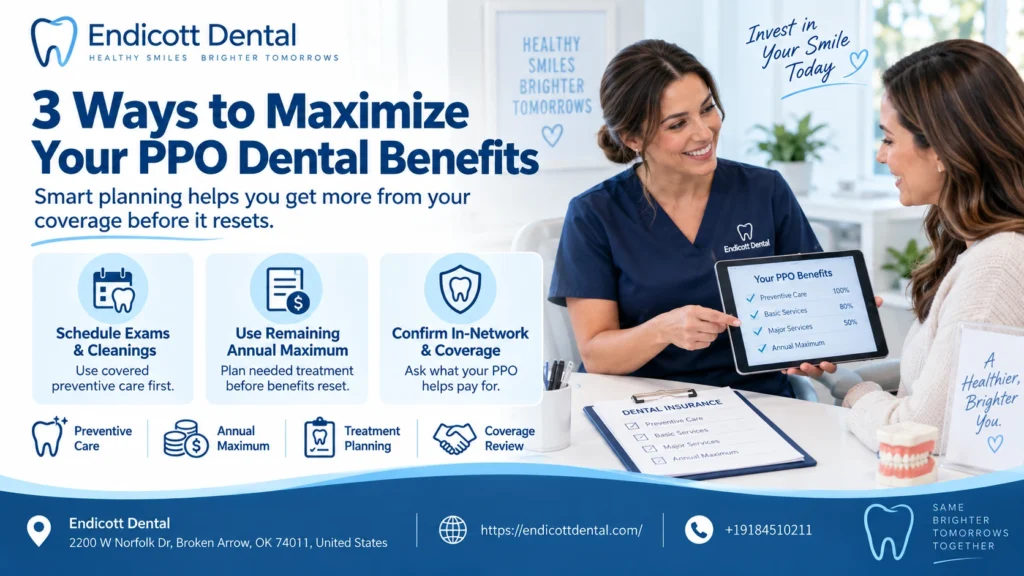
- Use preventive care every year
- Understand your annual maximum
- Schedule needed treatment before benefits expire
- Use HSA or FSA funds when available
- Avoid waiting until a dental problem becomes an emergency
Most PPO plans pay the highest benefits for preventive care and a portion of restorative treatment, but many patients leave unused benefits on the table every year simply because they don't understand how their plan works.
First: What Is a PPO Dental Plan?
PPO stands for Preferred Provider Organization.
It's the most common type of dental insurance offered by employers throughout the Tulsa metro area.
With a PPO plan, you can usually:
- Visit any licensed dentist
- Receive greater benefits from in-network providers
- Avoid referral requirements
- Receive partial coverage for many common procedures
This flexibility is why PPO plans are popular with both employers and employees.
The Biggest Dental Insurance Myth
Many patients believe:
"I have insurance, so most of my treatment should be covered."
Unfortunately, that's often not true.
Most dental insurance plans were designed decades ago and haven't changed much.
While medical insurance maximums have increased over time, many dental plans still have annual maximums between:
- $1,000
- $1,500
- $2,000
The surprising part?
Those annual maximums have remained relatively unchanged for years while treatment costs have increased.
As a result, dental insurance should be viewed as a benefit contribution, not comprehensive coverage.
Understanding Your Annual Maximum
Your annual maximum is the total amount your insurance company will pay during a benefit year.
For example:
If your annual maximum is $1,500:
- Cleanings count toward that benefit
- Fillings count toward that benefit
- Crowns count toward that benefit
Once the insurance company has paid $1,500, additional treatment costs become your responsibility until the benefit year resets.
Think of it like a spending account with a cap.
Why So Many Patients Lose Benefits Every Year
Most PPO plans operate on a calendar-year basis.
That means unused benefits often expire on December 31.
Here's a common scenario:
A patient has:
- Two unused cleanings
- Remaining annual maximum benefits
- Treatment they've been postponing
Then December arrives.
Appointments become scarce.
Benefits expire.
The patient loses money they've already paid for through premiums.
Unlike a savings account, most dental insurance benefits do not roll over.
Preventive Care Is Usually the Best Deal
Insurance companies want to avoid expensive treatment.
That's why preventive care often receives the highest level of coverage.
Many PPO plans cover:
- Exams
- Routine cleanings
- Diagnostic X-rays
at or near 100%.
Skipping preventive visits may save money today, but it often leads to larger expenses later.
A small cavity is usually less expensive than a root canal and crown.
A minor gum issue is usually less expensive than advanced periodontal treatment.
The Smartest Way to Use Your Annual Maximum
Many patients think they should avoid treatment because they don't want to use up benefits.
Often the opposite is true.
If you need treatment and have remaining benefits available, using them before they expire can significantly reduce your out-of-pocket costs.
For example:
A patient needing a crown in November may benefit from completing treatment before the benefit year ends rather than starting over with no remaining insurance contribution.
Every situation is different, but timing matters.
How to Coordinate Benefits With an HSA or FSA
If your employer offers:
- Health Savings Accounts (HSA)
- Flexible Spending Accounts (FSA)
you may be able to combine those funds with dental insurance.
This can help cover:
- Deductibles
- Copays
- Orthodontic treatment
- Cosmetic procedures not covered by insurance
- Larger restorative treatment
Many patients overlook these accounts even though they're one of the most effective ways to reduce out-of-pocket healthcare costs.
What About Invisalign?
This is one area where many patients get confused.
Some PPO plans include orthodontic benefits that can be applied toward Invisalign treatment.
Others don't.
If orthodontic benefits are included, insurance may contribute a fixed amount toward treatment.
The key is understanding your specific plan before making assumptions.
Two coworkers at the same company may have completely different benefit structures depending on the plan they selected.
Questions Every Patient Should Ask Their Dental Office
Before starting treatment, ask:
Is my dentist in-network?
Being in-network may reduce your out-of-pocket costs.
How much of my annual maximum remains?
Knowing this helps with treatment planning.
Will my insurance cover this procedure?
Ask for an estimate.
Just remember that estimates are not guarantees.
Can treatment be phased across two benefit years?
Sometimes larger treatment plans can be strategically scheduled across benefit periods to maximize insurance contributions.
What portion will I likely owe?
A good dental office should help you understand both insurance estimates and expected patient responsibility.
Tulsa-Area Employers Often Offer Different Dental Benefits
One mistake many people make is assuming all PPO plans work the same way.
They don't.
Benefits vary significantly between employers and carriers.
Even employees at the same company may have different plans based on:
- Coverage tier
- Family elections
- Employer contributions
- Plan upgrades
That's why individualized benefit verification matters.
The Bottom Line
Dental insurance can be extremely valuable.
But it works best when you understand how to use it.
The patients who maximize their benefits tend to:
- Get preventive care consistently
- Understand their annual maximum
- Use benefits before they expire
- Coordinate insurance with HSA or FSA funds
- Address problems early rather than waiting
The goal isn't simply to have dental insurance.
The goal is to make sure the benefits you're already paying for actually work for you.
FAQs
What is the difference between a PPO and HMO dental plan?
PPO plans generally offer more provider flexibility and allow you to see out-of-network dentists, while HMO plans usually require you to stay within a specific network.
What is an annual maximum?
It's the maximum amount your dental insurance company will pay toward treatment during a benefit year.
Do unused dental benefits roll over?
Most PPO plans do not allow unused benefits to roll over into the next year.
Is Invisalign covered by insurance?
Some PPO plans include orthodontic benefits that may help pay for Invisalign. Coverage varies by plan.
Should I delay treatment until next year?
Sometimes yes, sometimes no. It depends on your remaining benefits, treatment urgency, and upcoming benefit reset. A dental office can help you evaluate the best timing.
If you're unsure how your dental insurance works or want help understanding your benefits before committing to treatment, Dr. Drew Endicott and the team at Endicott Dental can review your coverage and help you make informed decisions. Understanding your insurance is often the first step toward making smarter dental care choices.
