

Table of Contents
If you're researching dental implants, you're probably seeing prices that seem to be all over the place.
One website says implants cost $1,500. Another says $6,000. Some advertisements promise "implants starting at $999." Others won't mention pricing at all.
The truth is that most of those numbers only tell part of the story.
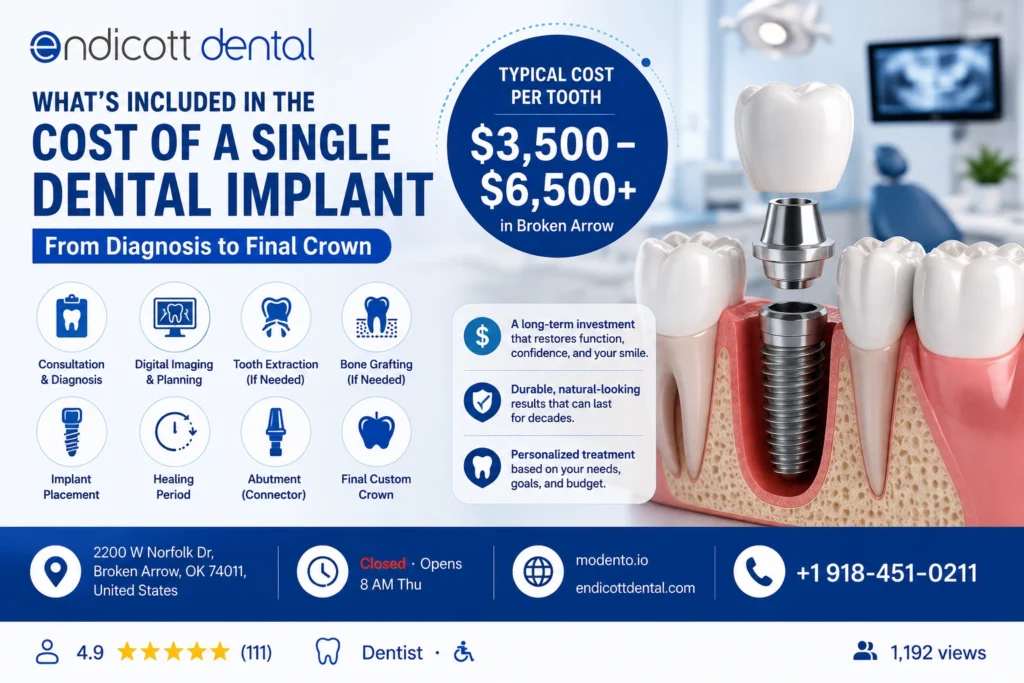
If you're replacing a single missing tooth in Broken Arrow, the total cost from diagnosis to final crown is typically between $3,500 and $6,500+ per tooth, depending on your specific needs.
The biggest mistake patients make is comparing implant prices without understanding what is and isn't included.
Here's what actually goes into the cost of a dental implant and why two patients can receive very different estimates.
Quick Answer: What Does a Single Dental Implant Cost?
For most patients, a complete implant treatment includes:
- Consultation and diagnosis
- Digital imaging and planning
- Tooth extraction (if needed)
- Bone grafting (if needed)
- Implant placement
- Healing period
- Abutment (connector piece)
- Final custom crown
When all phases are included, most single-tooth implant cases in the Broken Arrow area fall somewhere between:
$3,500 to $6,500+
Some straightforward cases may fall below that range.
More complex cases requiring extraction, grafting, or additional surgical procedures can exceed it.
That's why any advertised implant price should be viewed carefully.
Why You See Implant Prices That Don't Match
Many implant advertisements only include one piece of the treatment.
For example, a practice may advertise:
- Implant placement only
- The implant post only
- The surgical phase only
But patients don't buy implant posts.
Patients buy teeth.
The number that matters is the cost from the initial diagnosis all the way through the final crown that you actually chew with and smile with.
When comparing offices, always ask:
"Does this quote include everything from consultation to the final crown?"
What Affects the Cost of Dental Implants?
No two implant cases are identical.
Several factors influence the final investment.
1. Whether the Tooth Is Already Missing
If the tooth has already been removed and the area has healed properly, treatment is often more straightforward.
If the tooth still needs extraction, that procedure adds to the overall cost.
2. Bone Quality
Dental implants require adequate bone support.
If bone loss has occurred, a bone graft may be recommended before or during implant placement.
This is one of the most common reasons implant costs increase.
3. Implant Location
Replacing a front tooth often involves more cosmetic planning.
Replacing a molar may involve different functional considerations.
The location can influence both complexity and cost.
4. Number of Missing Teeth
A single implant differs significantly from:
- Multiple implants
- Implant bridges
- Implant-supported dentures
- Full-mouth reconstruction
The treatment plan matters more than any advertised implant price.
5. Technology and Planning
Modern implant treatment often involves:
- 3D CBCT imaging
- Digital treatment planning
- Guided implant placement
These tools improve precision and predictability but also represent part of the investment.
Why Implants Cost More Than Bridges or Dentures
Patients often ask this question.
And it's a fair one.
Dental implants typically have a higher upfront cost than traditional alternatives.
However, implants offer several advantages:
- They replace the tooth root
- They help preserve jawbone
- Adjacent teeth typically don't need to be altered
- They can last decades with proper care
- They often feel more like natural teeth
That doesn't automatically make implants the right choice for everyone.
But it helps explain why they are often viewed as a long-term investment rather than simply a replacement tooth.
Are Dental Implants Worth It?
For many patients, yes.
Especially if:
- You are missing a single tooth
- You want a fixed solution
- You want to preserve surrounding teeth
- You want a restoration that looks and functions naturally
However, implants aren't always necessary.
Sometimes a bridge may be a reasonable alternative.
Sometimes a partial denture makes more financial sense.
The best treatment depends on your goals, health, budget, and timeline.
A good dentist should explain all reasonable options, not just the most expensive one.
What About Dental Insurance?
Insurance coverage for implants varies significantly.
Some plans:
- Cover portions of treatment
- Cover crowns but not implants
- Cover extractions but not implant placement
- Provide limited implant benefits
Others offer little or no implant coverage.
This is why we encourage patients to have their specific benefits reviewed before making assumptions about out-of-pocket costs.
Why a Consultation Matters
Here's what we'd honestly tell you if you asked us in person:
No website including this one can tell you exactly what your implant will cost.
Until we evaluate:
- The condition of the tooth
- Bone levels
- Gum health
- Existing dental work
- X-rays or CBCT imaging
Any estimate is just a range.
The good news is that a consultation allows us to identify exactly what is needed and what isn't.
Sometimes patients assume they'll need grafting and they don't.
Sometimes patients fear implants are unaffordable only to discover financing options make treatment much more manageable.
Want a Personalized Implant Estimate?
If you're considering dental implants in Broken Arrow, the team at Endicott Dental can evaluate your situation and explain every option available including implants, bridges, and removable solutions.
Our goal isn't to push treatment.
It's to help you understand the costs, benefits, limitations, and long-term implications of each choice so you can make the right decision for your health and budget.
Frequently Asked Questions
Can a dental implant really last a lifetime?
Many implants can last decades when properly placed and maintained. However, long-term success depends on oral hygiene, health conditions, smoking status, and regular dental care.
Is getting an implant painful?
Most patients report less discomfort than they expected. Implant placement is typically performed under local anesthesia, and recovery is often easier than a tooth extraction.
How long does the implant process take?
Many implant cases take several months from placement to final crown because the implant must fuse with the bone before restoration.
Are cheaper implants a red flag?
Not necessarily—but it's important to understand exactly what is included. A very low advertised price often represents only one portion of the treatment.
What is the biggest factor affecting implant cost?
Bone grafting, extractions, surgical complexity, and the final restoration are often the biggest variables that influence total treatment cost from diagnosis to crown.
