

Table of Contents
If your jaw clicks every time you yawn, chew, or take a bite of lunch in the car between meetings, you're not alone.
Many adults across Broken Arrow, Tulsa, and the surrounding metro hear a popping or clicking sound in their jaws and assume it's either normal or something they'll just have to live with. Others worry it means surgery is in their future.
The reality is usually somewhere in the middle.
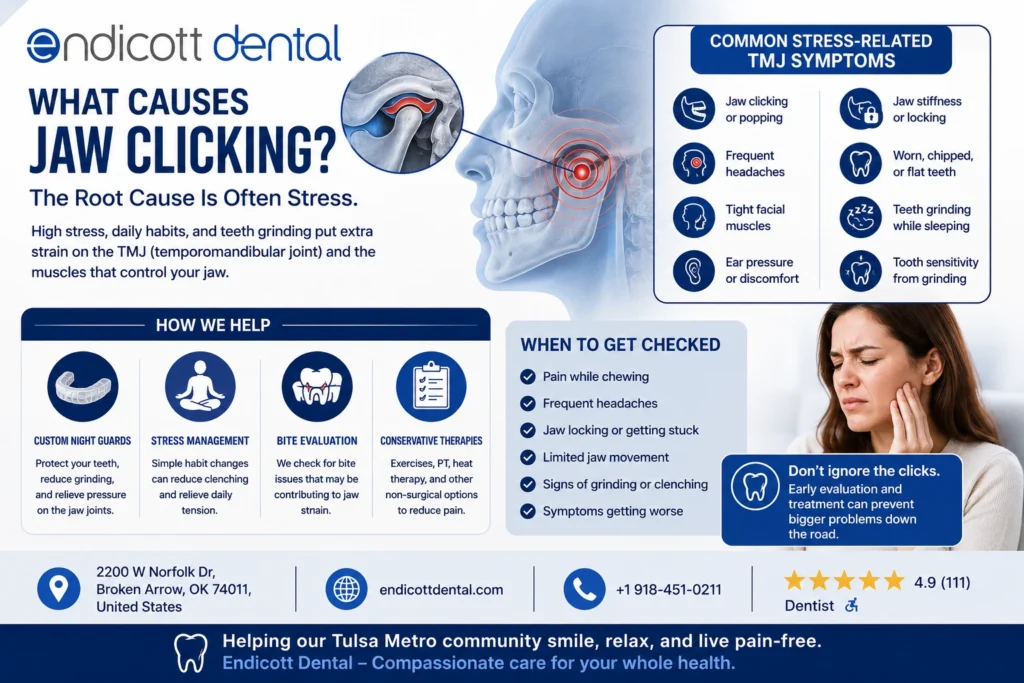
In many cases, jaw clicking is related to a condition involving the temporomandibular joint (TMJ), the hinge that connects your jaw to your skull. Stress, teeth grinding, jaw clenching, poor sleep, and even long daily commutes can contribute to the problem.
The good news? Most TMJ issues can be managed conservatively when caught early.
The Fast Answer
If your jaw clicks but doesn't hurt, it may not require immediate treatment. However, if the clicking is accompanied by pain, headaches, jaw stiffness, ear discomfort, difficulty chewing, or episodes where your jaw locks open or closed, it's worth scheduling an evaluation.
For many patients, the root cause isn't a jaw problem at all it's chronic clenching and grinding caused by stress.
At Endicott Dental, Dr. Drew Endicott regularly sees patients from Broken Arrow and throughout the Tulsa metro who don't realize their daily habits are putting significant strain on their jaw joints and muscles.
What Exactly Is the TMJ?
You have two temporomandibular joints one on each side of your head just in front of your ears.
These joints allow you to:
- Open and close your mouth
- Talk
- Chew
- Yawn
- Move your jaw side to side
Inside each joint is a small disc that helps the jaw move smoothly.
When that disc shifts out of position or the surrounding muscles become overworked, you may hear clicking, popping, or grinding sounds.
Why High-Stress Commuters Often Develop TMJ Problems
One of the most common patterns we see isn't related to sports injuries or accidents.
It's stressful.
Many professionals in the Tulsa metro spend significant time:
- Commuting on Highway 169 or the Creek Turnpike
- Sitting in traffic during peak hours
- Managing demanding work schedules
- Taking calls while driving
- Working through lunch breaks
- Carrying tension in their neck and shoulders
Stress doesn't just affect your mood.
It often shows up physically through unconscious jaw clenching.
Many people don't realize they're doing it until symptoms appear.
Common Stress-Related TMJ Symptoms
- Jaw clicking or popping
- Morning jaw soreness
- Frequent headaches
- Tight facial muscles
- Ear pressure without an ear infection
- Neck pain
- Worn or flattened teeth
- Sensitivity from grinding
For some patients, the damage happens while they're asleep.
Nighttime grinding, also called bruxism, places tremendous pressure on both the teeth and jaw joints.
When Jaw Clicking Is Usually Not Serious
Not every clicking jaw requires treatment.
In many cases, occasional clicking without pain can be monitored.
Generally speaking, it's less concerning when:
- The clicking is occasional
- There's no pain
- Your jaw opens normally
- Chewing isn't difficult
- Symptoms aren't worsening
Some people live with mild jaw clicking for years without significant progression.
That said, it's still worth mentioning during routine dental visits so your dentist can monitor any changes.
When You Should Have It Evaluated
Jaw clicking becomes more concerning when it's accompanied by other symptoms.
Consider scheduling an evaluation if you experience:
Pain While Chewing
Discomfort when eating often signals inflammation or joint dysfunction.
Frequent Headaches
Many TMJ sufferers assume they have migraines or tension headaches when the source is actually jaw-related muscle strain.
Jaw Locking
If your jaw occasionally gets stuck open or closed, don't ignore it.
Limited Jaw Movement
Difficulty opening wide enough to eat comfortably can indicate worsening TMJ dysfunction.
Signs of Teeth Grinding
Cracked teeth, worn enamel, and tooth sensitivity often point to chronic clenching.
The Most Common TMJ Treatments
Treatment depends on the underlying cause.
The goal is usually to reduce stress on the joint, relax overworked muscles, and prevent further damage.
Custom Night Guards
For patients who grind or clench while sleeping, a custom night guard is often one of the most effective solutions.
A professionally made appliance can:
- Protect teeth from wear
- Reduce muscle strain
- Decrease pressure on the jaw joints
However, it's important to understand that a night guard isn't a cure-all.
If bite issues, arthritis, or other factors are involved, additional treatment may be necessary.
Stress Management
This sounds simple, but it's often overlooked.
Patients frequently notice improvement when they:
- Improve sleep quality
- Exercise regularly
- Reduce caffeine intake
- Become aware of daytime clenching habits
One simple trick: check where your teeth are touching throughout the day.
At rest, your teeth should generally not be clenched together.
Bite Evaluation
Sometimes an uneven bite contributes to chronic strain on the jaw muscles.
A comprehensive dental exam can help determine whether bite issues are playing a role.
Conservative Therapies
Depending on symptoms, recommendations may include:
- Jaw exercises
- Physical therapy
- Anti-inflammatory medications
- Heat therapy
- Lifestyle modifications
Most patients improve without surgical intervention.
What About TMJ Surgery?
Many people worry that jaw clicking automatically leads to surgery.
That's rarely the case.
Surgery is typically reserved for severe structural problems or cases that don't respond to conservative treatment.
For the vast majority of patients, non-surgical options are explored first.
Can Ignoring TMJ Problems Make Things Worse?
Sometimes.
Mild clicking may remain stable for years.
However, persistent grinding, clenching, and untreated inflammation can lead to:
- Increased pain
- More frequent headaches
- Worsening joint dysfunction
- Tooth fractures
- Excessive tooth wear
The earlier the cause is identified, the easier it often is to manage.
How Do You Know If Stress Is the Real Cause?
Ask yourself:
- Do you wake up with jaw soreness?
- Do you notice yourself clenching while driving?
- Are your headaches worse during stressful periods?
- Has anyone told you that you grind your teeth at night?
- Are your symptoms worse after difficult workdays?
If you answered yes to several of these questions, stress-related clenching may be contributing to your symptoms.
The Bottom Line
A clicking jaw isn't always an emergency, but it shouldn't be ignored if it's becoming painful, frequent, or disruptive.
For many adults throughout Broken Arrow and the Tulsa metro, TMJ symptoms are closely tied to stress, teeth grinding, and chronic jaw tension. Understanding what's causing the problem is the first step toward finding relief.
If you're dealing with jaw clicking, headaches, facial tension, or signs of grinding, Dr. Drew Endicott and the team at Endicott Dental can help determine what's causing your symptoms and whether treatment is actually necessary. The goal isn't simply to treat the noise—it's to help you protect your teeth, reduce discomfort, and make informed decisions about your oral health.
Frequently Asked Questions
Is jaw clicking always a sign of TMJ disorder?
No. Some people experience occasional clicking without pain or functional problems. However, persistent clicking accompanied by pain, headaches, or jaw stiffness should be evaluated.
Can stress really cause jaw problems?
Yes. Chronic stress often leads to unconscious clenching and grinding, which can overload the jaw joints and muscles.
Will a night guard stop jaw clicking?
Sometimes, but not always. Night guards are highly effective for protecting teeth and reducing strain caused by grinding. Whether they eliminate clicking depends on the underlying cause.
Can TMJ symptoms cause headaches?
Absolutely. Many patients experience tension headaches that originate from overworked jaw muscles.
Should I see a dentist or a physician for TMJ problems?
A dentist is often a good starting point, especially when symptoms involve grinding, clenching, bite issues, or tooth wear. A comprehensive evaluation can help determine whether additional specialists are needed.
