

Table of Contents
Friday night lights. A packed stadium. A hard hit. A player gets up holding their mouth.
Then someone spots a tooth on the ground.
It's one of those situations where most parents, coaches, and even athletes aren't sure what to do next.
The problem is that when a permanent tooth gets knocked out, every minute matters.
The actions you take during the first 30 minutes can dramatically affect whether that tooth can be saved.
Quick Answer: If a Permanent Tooth Gets Knocked Out
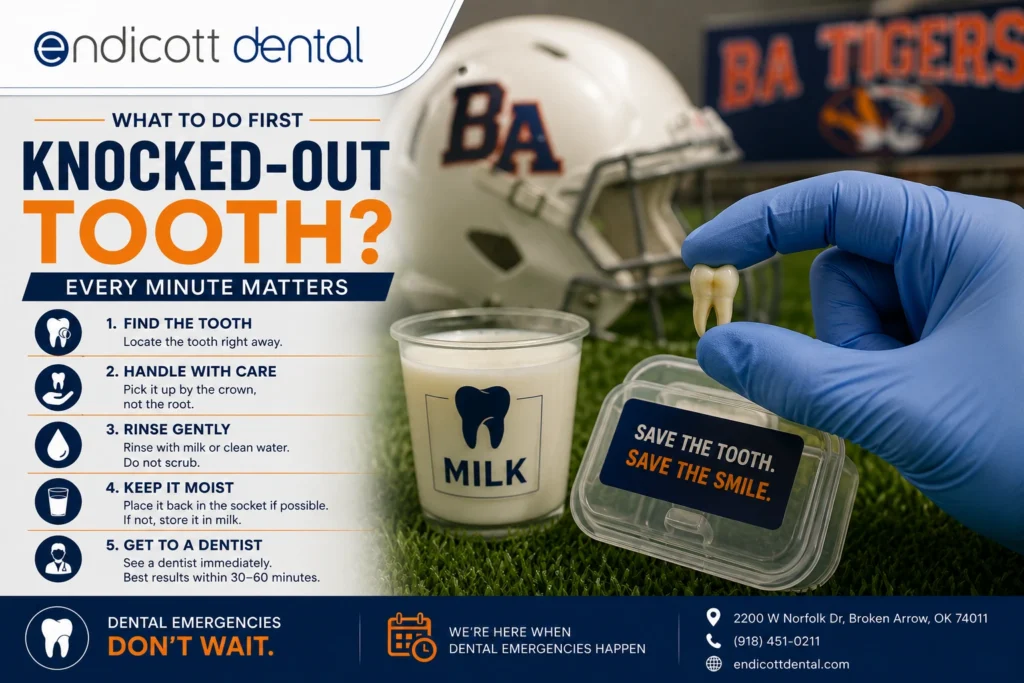
If a permanent tooth is completely knocked out:
- Find the tooth immediately.
- Pick it up by the crown (the chewing surface), not the root.
- If dirty, gently rinse it with milk or clean water for a few seconds.
- Do not scrub it.
- If possible, place the tooth back into the socket.
- If that's not possible, store it in milk.
- Get to a dentist immediately.
The best outcomes typically happen when treatment begins within 30 to 60 minutes.
The Most Important Question: Baby Tooth or Permanent Tooth?
This changes everything.
If It's a Baby Tooth
Do not try to put it back in.
Reimplanting a baby tooth can damage the developing permanent tooth underneath.
The child should still be evaluated by a dentist, but the emergency is different.
If It's a Permanent Tooth
Time becomes critical.
The goal is keeping the root cells alive until the tooth can be professionally stabilized.
Don't Grab the Root
This is the mistake most people make.
When you find the tooth, hold it by the crown only.
The root contains delicate living cells that help determine whether the tooth can successfully reattach.
Touching, scrubbing, or scraping the root can damage those cells.
Should You Rinse the Tooth?
Yes but gently.
If the tooth landed on the field and has dirt or debris on it:
- Rinse briefly with milk if available
- Clean water is acceptable if necessary
- Do not use soap
- Do not use disinfectants
- Do not scrub the tooth
- Do not wrap it in a paper towel
The goal is cleaning it without damaging the root surface.
The Best Case Scenario: Put It Back In
If the athlete is conscious, cooperative, and the tooth appears intact, placing it back into the socket is often the ideal solution.
Many parents are surprised to hear this.
But in many cases, the safest place for the tooth is actually back where it came from.
Once seated, the athlete can gently bite on gauze or a clean cloth to help hold it in place while heading to the dentist.
If that sounds intimidating, don't worry.
There's another option.
Milk Is Your Best Friend
If reinserting the tooth isn't possible, place it in:
🥛 Cold milk
Milk helps preserve the living cells on the root far better than most alternatives.
This is why athletic trainers, coaches, and parents often hear dentists recommend milk during dental emergencies.
What NOT to Store It In
Avoid:
- Paper towels
- Napkins
- Tissue
- Dry containers
- Ice
- Hot water
A dry tooth loses viability quickly.
The goal is keeping it moist.
Why Football Players Are Especially Vulnerable
Football is one of the most common causes of dental trauma in teenagers.
Even with helmets and face masks, we see injuries involving:
- Knocked-out teeth
- Cracked teeth
- Broken teeth
- Lip injuries
- Jaw trauma
That's one reason properly fitted mouthguards are so important.
A quality mouthguard can significantly reduce the risk of serious dental injuries.
What Happens at the Dental Office?
If a permanent tooth is successfully recovered, treatment may involve:
- Repositioning the tooth
- Stabilizing it with a splint
- Taking X-rays
- Monitoring nerve health
- Follow-up treatment over time
The exact treatment depends on:
- The athlete's age
- How long the tooth was out
- Whether the root was damaged
- Whether the tooth was stored properly
The sooner treatment begins, the better the odds.
The Biggest Mistake Parents Make
Waiting.
Many people assume:
"It'll be okay until Monday."
Unfortunately, a knocked-out permanent tooth is one of the few true dental emergencies where immediate action can make the difference between saving and losing the tooth.
This isn't a "wait and see" situation.
What We Tell BA Tigers Parents
Here's what we'd honestly tell you.
If a permanent tooth gets knocked out during a BA Tigers football game, don't panic—but don't delay either.
Find the tooth.
Handle it carefully.
Keep it moist.
Get help quickly.
The faster those steps happen, the greater the chance that tooth can be saved.
Dental Emergency in Broken Arrow?
If your child experiences a sports-related dental injury, Dr. Drew Endicott and the team at Endicott Dental can help evaluate the injury and determine the best next steps.
Dental trauma is stressful enough without wondering what to do. Knowing how to respond before an emergency happens can make all the difference when seconds count.
Frequently Asked Questions
How long can a knocked-out tooth survive?
The best outcomes occur when the tooth is reimplanted or treated within 30 to 60 minutes.
Can a baby tooth be put back in?
No. Baby teeth should generally not be reimplanted because of the risk of damaging the developing permanent tooth.
Is milk really the best storage option?
Yes. If reinsertion isn't possible, milk is one of the best readily available storage solutions.
What if the tooth looks dirty?
Gently rinse it. Do not scrub or scrape the root.
Can a mouthguard prevent knocked-out teeth?
While no mouthguard can prevent every injury, properly fitted mouthguards significantly reduce the risk of serious dental trauma during contact sports.
